
According to a senior commerce department official, talks between India and the Association of South East Asian Nations (Asean) - the 10-country trading bloc - have hit a roadblock, with some of the advanced developing countries demanding greater flexibilities from India.

Earlier this week, commerce secretary Rahul Khullar met EU director-general for trade David O'Sullivan to review the progress so far. Several differences mired the process over EU's insistence on including social issues such as human rights, labour policies and climate change within the FTA purview.

Steel Authority of India Ltd (SAIL) is looking for ventures into analogous sectors. While the state-run company is going for a follow-on public offer (FPO) in early 2011, it is looking at some aggressive expansion plans, and mergers and acquisitions as well, said Chandra Shekhar Verma, chairman and managing director.

India and Canada aim at achieving a bilateral trade target of $15 billion in the next five years, even as both countries are beginning a series of negotiations to have a Comprehensive Economic Partnership Agreement (CEPA) soon that would yield significant economic benefit for both countries and lower tariffs over a large number of products, says Peter Van Loan, Minister of International Trade, Canada.

The Department of Fertilizers (DoF) plans to bring in all policies, including the New Investment Policy meant to overhaul urea production, under one umbrella - Nutrient-Based Subsidy (NBS) policy.

SEZs promoted by Reliance, Raheja, IFFCO may benefit.

The government has failed to reach a consensus on the issue of setting up plastic reprocessing units in special economic zones and is likely to defer its decision once again in the meeting of the Board of Approval on October 21.

India may formally approach the World Trade Organisation's dispute panel against the European Union following the seizure of low-cost generic medicine consignments in European ports meant for other developing countries. The two parties have failed to reach an amicable solution during the consultation process.

Last week, Chandra Shekhar Verma did something rather uncharacteristic for a state-owned company chieftain, especially one reputed to be a stickler for rules. The Steel Authority of India (SAIL) chairman - its youngest ever - openly criticised the government.

Nine years after New Delhi started implementing its Plan B - bilateral trade agreements - to beat the impasse at the World Trade Organisation's Doha Round of liberalisation talks, India seems to be finally rolling.

Commerce and Industry Minister Anand Sharma had earlier said the government would not hesitate in assisting sectors that employed huge amount of people if they failed to achieve growth. Some of those sectors were handicrafts, textiles, leather, engineering goods, rice and carpets.

The developers, including Raheja Ltd, Ascendas, L&T and GMR, among others, are in the Ministry of Commerce and Industry's Export Promotion Council for export oriented units and special economic zones.

Will come out with a response on the issue shortly.
The government is considering a proposal to allow 100 per cent foreign direct investment into the country's defence sector, despite stiff opposition from the defence ministry that has raised security concerns.

Exporters are increasingly becoming jittery of making huge losses and apprehend large-scale cancellation of orders and delay in payments.
According to Indian officials, both the sides have had "fruitful consultations" regarding elimination of tariffs on 90-95 per cent of goods, but the EU's insistence on including non-trade issues, such as child labour, labour laws and climate change, in the trade pact are coming in the way of concluding an agreement.
The central bank may classify them as foreign-owned Indian banks.

Notwithstanding the widespread protest against the proliferation of special economic zones in the country, the Ministry of Commerce and Industry is organising a seminar on the tax-free conclaves in Singapore on Wednesday in order to rope in global investors.

New foreign trade policy likely by May.
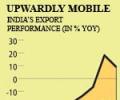
Although India's exports have started growing again after several months of decline, commerce ministry sources told Business Standard that the extension is being considered to sustain growth and stabilise it at 15 to 20 per cent.
 © 2026 Rediff.com - Investor Information - Advertise with us - Disclaimer - Privacy Policy - Sitemap - Feedback - About us - Terms of use - Grievances